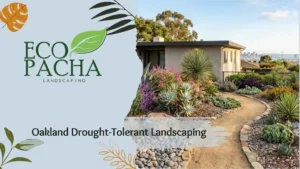




Oakland homeowners face a landscaping challenge that is increasingly difficult to ignore: creating attractive outdoor spaces without relying heavily on water. Dry summers, changing weather patterns, and the Bay Area’s varied microclimates can make traditional lawns and water-intensive gardens difficult to maintain efficiently. Oakland Drought-Tolerant Landscaping offers a better approach by combining thoughtful plant selection, efficient irrigation, drainage planning, and landscape design that works with the property’s natural conditions.
EcoPacha Landscaping approaches landscape redesign as a site-specific process rather than applying the same design to every property. Its design team considers a property’s microclimate, slope, drainage requirements, environmental factors, and the homeowner’s preferences before developing a customized layout. The company also emphasizes sustainable, eco-friendly materials and drought-resistant plants suited to Bay Area conditions.
Why Drought-Tolerant Landscaping Makes Sense in Oakland
A drought-tolerant landscape is not simply a yard filled with rocks or plants that receive almost no water.
Good drought-conscious landscaping is about using water intelligently.
That can involve selecting plants that are naturally suited to local conditions, grouping plants according to their water requirements, improving soil conditions, designing efficient irrigation, and reducing unnecessary areas of thirsty turf.
The result can be a landscape that remains attractive while requiring less ongoing water and maintenance.
For Oakland properties, this approach is particularly valuable because neighborhoods can have very different growing conditions. Sun exposure, wind, slope, soil, and nearby structures can all influence how quickly plants dry out.
A successful landscape needs to account for those differences before installation begins.
Start With the Property, Not a Plant List
One of the biggest mistakes homeowners make when redesigning a yard is choosing plants first and figuring out where to put them later.
Professional landscape design takes the opposite approach.
EcoPacha’s process begins with an on-site consultation where the property, terrain, and homeowner’s goals are evaluated. Its design team considers microclimate, slope, drainage, personal style, and the intended function of the outdoor space before creating a layout.
That process is particularly important for drought-tolerant landscaping.
Understanding Oakland’s Microclimates
A backyard that receives full afternoon sun will have different plant requirements from a shaded area beneath mature trees.
Likewise, a windy hillside can dry out faster than a protected garden bed.
Instead of treating the entire property as one environment, a professional designer can divide the landscape into planting areas based on their individual conditions.
Evaluating Slopes and Drainage
Water does not move evenly across a sloped property.
Rain can run downhill, collect in low areas, or carry soil and mulch away from planting beds. Poor drainage can also cause problems for plants that prefer drier conditions.
EcoPacha specifically designs landscapes around property slope and drainage needs, while its hardscaping work incorporates drainage planning for Bay Area terrain.
Choosing Drought-Resistant and Native Plants
Plant selection is one of the most important parts of a water-conscious landscape.
EcoPacha identifies drought-resistant plants suited to Bay Area microclimates as part of its eco-friendly landscaping approach. The company’s landscape design offerings also include native plant gardens and shade plantings.
Native and climate-appropriate plants can be particularly useful because they are selected with local environmental conditions in mind.
Instead of forcing plants that require frequent irrigation to survive, homeowners can create planting areas around species better suited to the conditions.
Group Plants by Water Requirements
A landscape becomes easier to manage when plants with similar water needs are grouped together.
High-water plants should not necessarily share an irrigation zone with drought-tolerant plants.
Grouping plants according to their requirements allows irrigation to be more targeted and reduces the likelihood of overwatering some areas simply because another section needs more moisture.
Use Plants for More Than Color
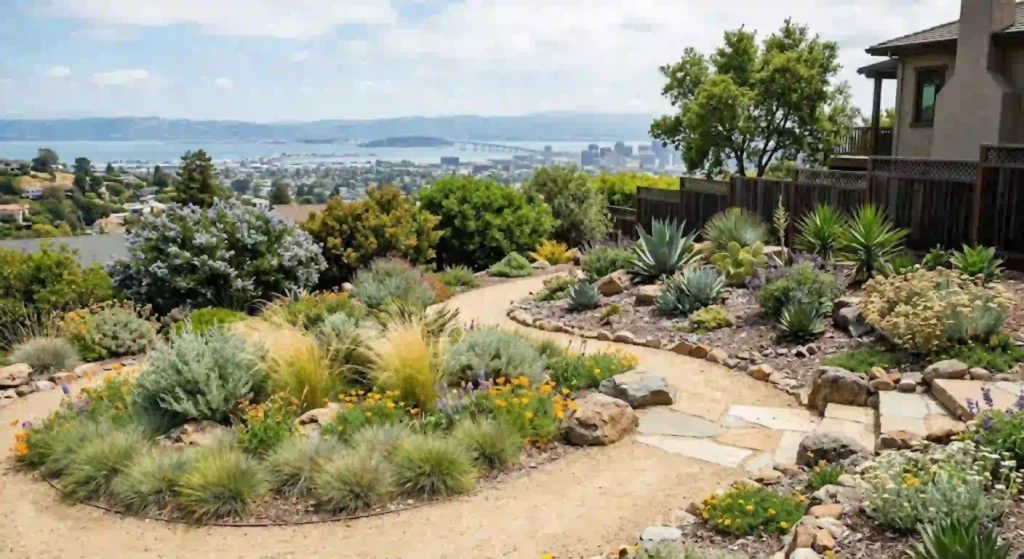
Drought-tolerant landscaping does not have to look sparse.
Different heights, textures, foliage shapes, seasonal colors, and flowering periods can create visual interest without relying on a traditional lawn-dominated design.
Native plant gardens, foundation plantings, privacy plantings, shade plantings, and formal garden areas are among the landscape design possibilities EcoPacha highlights.
Efficient Irrigation Is Part of the Design
Even drought-tolerant landscapes need water while plants establish themselves and during particularly dry periods.
The objective is to deliver water where it is needed rather than watering the entire property indiscriminately.
EcoPacha’s landscaping information highlights water-efficient irrigation solutions as part of its sustainable approach. Its maintenance services also include irrigation checks and adjustments to support plant health and optimal water use.
A professionally designed irrigation system can help separate planting zones and match watering to the needs of each area.
This is more effective than simply increasing watering time whenever plants begin looking stressed.
A Typical Oakland Landscape Redesign
Consider an Oakland homeowner with a large traditional lawn that has become increasingly difficult to maintain.
The property receives strong sunlight across much of the front yard, while another portion remains shaded. During dry periods, keeping the lawn green requires frequent irrigation, yet some plants near the home’s foundation struggle because they receive different amounts of sunlight and moisture.
Instead of replacing the lawn with a random collection of drought-resistant plants, the homeowner chooses a complete landscape redesign.
The project begins with a site assessment. The designer evaluates the property’s microclimates, slope, drainage, existing vegetation, and the homeowner’s goals.
The new plan replaces unnecessary high-water areas with carefully selected drought-resistant and native plantings. Plant groupings are organized according to water needs, while pathways and other functional elements are incorporated into the design.
The final landscape is not simply “low water.” It is designed around how the property actually functions.
This is the advantage of professional redesign: every element has a reason for being there.
Why Professional Landscape Design Matters
Drought-tolerant landscaping is sometimes treated as a simple planting project.
In reality, the design decisions made before installation can determine whether the landscape remains healthy and attractive.
Professionals Understand Site Conditions
A professional can identify differences in sunlight, slope, drainage, soil, and exposure that may not be obvious to a homeowner.
EcoPacha’s landscape design process specifically evaluates environmental factors and property conditions before developing the layout.
Professional Design Prevents Mismatched Planting
A drought-resistant plant is not automatically appropriate for every location.
Some plants may tolerate direct sun but perform poorly in shade. Others may prefer well-drained soil and struggle in areas where water collects.
Professional planning helps match plants to the conditions where they are most likely to perform well.
Drainage Needs to Be Considered Early
Adding drought-tolerant plants does not fix an underlying drainage problem.
If water repeatedly collects in one area, the landscape may need grading, drainage improvements, or a different planting strategy.
EcoPacha offers drainage work and grading as part of its broader landscape design capabilities.
Hardscaping Can Reduce Water-Intensive Areas
A well-designed drought-tolerant landscape does not have to consist entirely of planting beds.
Hardscaping can create useful outdoor areas while reducing the amount of landscape that requires regular irrigation.
Patios, walkways, retaining walls, and other structural elements can help organize the property and create usable spaces between planting zones.
EcoPacha builds patios, walkways, driveways, and retaining walls using materials such as natural stone, concrete, and brick. Its hardscaping projects also incorporate drainage planning suited to Bay Area terrain and weather.
For an Oakland homeowner, combining drought-conscious planting with carefully designed hardscaping can create a landscape that is both functional and visually distinctive.
Rain Gardens and Smarter Water Management
Drought-tolerant landscaping is often associated with conserving water during dry weather, but good design should also consider what happens when rain arrives.
Rain gardens can provide a designated area for managing stormwater while adding another type of planting environment to the landscape.
EcoPacha lists rain gardens among its landscape design services, along with drainage work, native plant gardens, foundation plantings, privacy plantings, and shade plantings.
The right solution depends on the property’s grading, soil, drainage patterns, and overall layout.
Low-Maintenance Does Not Mean No Maintenance
One of the benefits of drought-tolerant landscaping is that it can reduce ongoing water and maintenance demands.
However, even a well-designed landscape needs care.
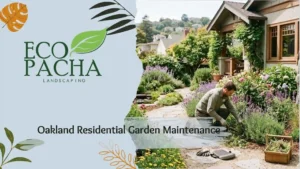
Young plants require appropriate watering while establishing their root systems. Plants still need pruning, weeds need to be controlled, and seasonal cleanup may be necessary.
EcoPacha’s garden maintenance programs include pruning, seasonal cleanups, pest control, and soil health management.
Regular maintenance helps protect the investment homeowners make in a redesigned landscape.
Why DIY Landscaping Can Become Expensive
Buying drought-resistant plants does not automatically create a successful drought-tolerant landscape.
Without professional planning, homeowners can end up with:
- Plants placed in unsuitable sun conditions
- Irrigation zones that do not match plant needs
- Poor drainage
- Unnecessary turf
- Erosion on sloped areas
- Plants with incompatible water requirements
- A design that becomes difficult to maintain
Correcting those mistakes later can require removing plants, rebuilding irrigation, changing drainage, or redesigning entire sections of the yard.
Professional design addresses these considerations before installation.
EcoPacha’s process moves from an on-site consultation to custom design and materials selection, followed by installation and a final quality review.
Designing an Oakland Yard for Long-Term Value
A thoughtfully designed landscape can improve more than water efficiency.
A successful redesign can increase curb appeal, create functional outdoor spaces, improve the property’s visual character, and potentially contribute to property value.
EcoPacha notes that well-executed landscape design can improve aesthetic appeal and property value while creating a stronger first impression for visitors or potential buyers.
For Oakland homeowners, the best drought-tolerant landscape is therefore not simply one that uses less water.
It should also be a landscape the homeowner enjoys using.
FAQs About Drought-Tolerant Landscaping in Oakland
What is drought-tolerant landscaping?
Drought-tolerant landscaping uses plants and design strategies that can perform with less supplemental water than traditional water-intensive landscapes. It may include native plants, efficient irrigation, appropriate soil management, and reduced lawn areas.
Can drought-tolerant landscaping still look lush?
Yes. A professional design can combine different plant heights, textures, foliage, flowers, and seasonal interest to create a visually rich landscape without relying primarily on a traditional lawn.
Does EcoPacha use native plants?
Yes. EcoPacha includes native plant gardens among its landscape design options and promotes drought-resistant plants suited to Bay Area microclimates.
Does landscape redesign include drainage planning?
Drainage can be incorporated into the overall design. EcoPacha provides drainage work and considers slope and drainage needs when developing landscape layouts.
How does professional landscaping reduce water use?
Professional design can reduce water demand by selecting appropriate plants, grouping plants according to water requirements, reducing unnecessary turf, and incorporating water-efficient irrigation solutions.
Create a Water-Wise Oakland Landscape
A drought-tolerant landscape should never feel like a compromise. With the right design, Oakland homeowners can create outdoor spaces that are attractive, functional, environmentally responsible, and better suited to local conditions.
EcoPacha Landscaping approaches landscape redesign by first understanding the property, including its microclimate, slope, drainage, and the homeowner’s goals. From native and drought-resistant planting to water-efficient irrigation, hardscaping, rain gardens, and ongoing maintenance, its services can bring the major pieces of a sustainable landscape together.
If you’re ready to replace a water-intensive yard or redesign an outdated Oakland landscape, contact EcoPacha Landscaping at 415-480-4452 to schedule an on-site consultation and request a free estimate.